Picture this: You're tasked with migrating the digital backbone and UX of "the fashion bible" WWD.com, Women's Wear Daily, a 110-year-old institution that serves 1.5 million unique users and generates over 15 billion impressions. This wasn't just any website; this was Conde Nast's biggest database migration, supporting the daily media of record for the entire global fashion industry.
When you're handling a platform that influential fashion executives, Wall Street analysts, and industry titans depend on for critical business decisions, there's no room for shortcuts. Every line of code had to be pristine. Every potential failure point eliminated. I spent months training the team, systematizing the UX, and ensuring our architecture could handle the massive scale. Over 10 million monthly visits from an audience that expects nothing less than perfection and the UX had to look the part; just like Conde Nast's own Anna Wintour who I did bump into in the elevator once, but that's another story.
In that context, technical debt wasn't just inadvisable, it was dangerous and we were there to fix it, train up the in-house team. WWD was the last of the properties that we migrated, with good reason, it was by far the biggest and most complex. Clean code, comprehensive test coverage, and minimal technical debt weren't nice-to-haves; they were the foundation that kept a century-old media empire running.
The Engineering Dogma That Kills Startups
However, those same engineering principles that are essential for enterprise platforms become startup killers. The literature on the subject always speaks of tech debt as bad, and never suggests that it's even acceptable.

I watched a promising early-stage company spend six months building the "perfect" architecture while their competitor shipped a scrappy MVP and captured the entire market. The startup had beautiful, maintainable code that could theoretically scale to WWD.com's traffic levels. They also had zero customers.
Every engineering team I've worked with since has the same reflexive response to technical debt: eliminate it. It's treated like a disease, something shameful that needs to be cleaned up before anyone notices. But that WWD mindset, while perfect for established platforms, becomes a startup killer.
Let me state it plainly: technical debt isn't always the enemy. Sometimes it's your best friend.
Fast forward to my time at Gopuff during the hypergrowth phase. We didn't have a choice in building the "right" architecture. The business was moving too fast for even a comprehensive staging environment to be set up. Instead, we chose fast features that would unlock our next stage of growth, and it worked. We chose speed. The technical debt we accumulated (and we had bags of it piled up) didn't kill us, it funded our next round and rocketed the company to a valuation in the tens of billions.
What Velocity Actually Means
Technology leaders often get the concept of Velocity wrong, as we're measuring the wrong thing. Coming from enterprise platforms where we measure system stability and code quality, we apply the same metrics to startups.
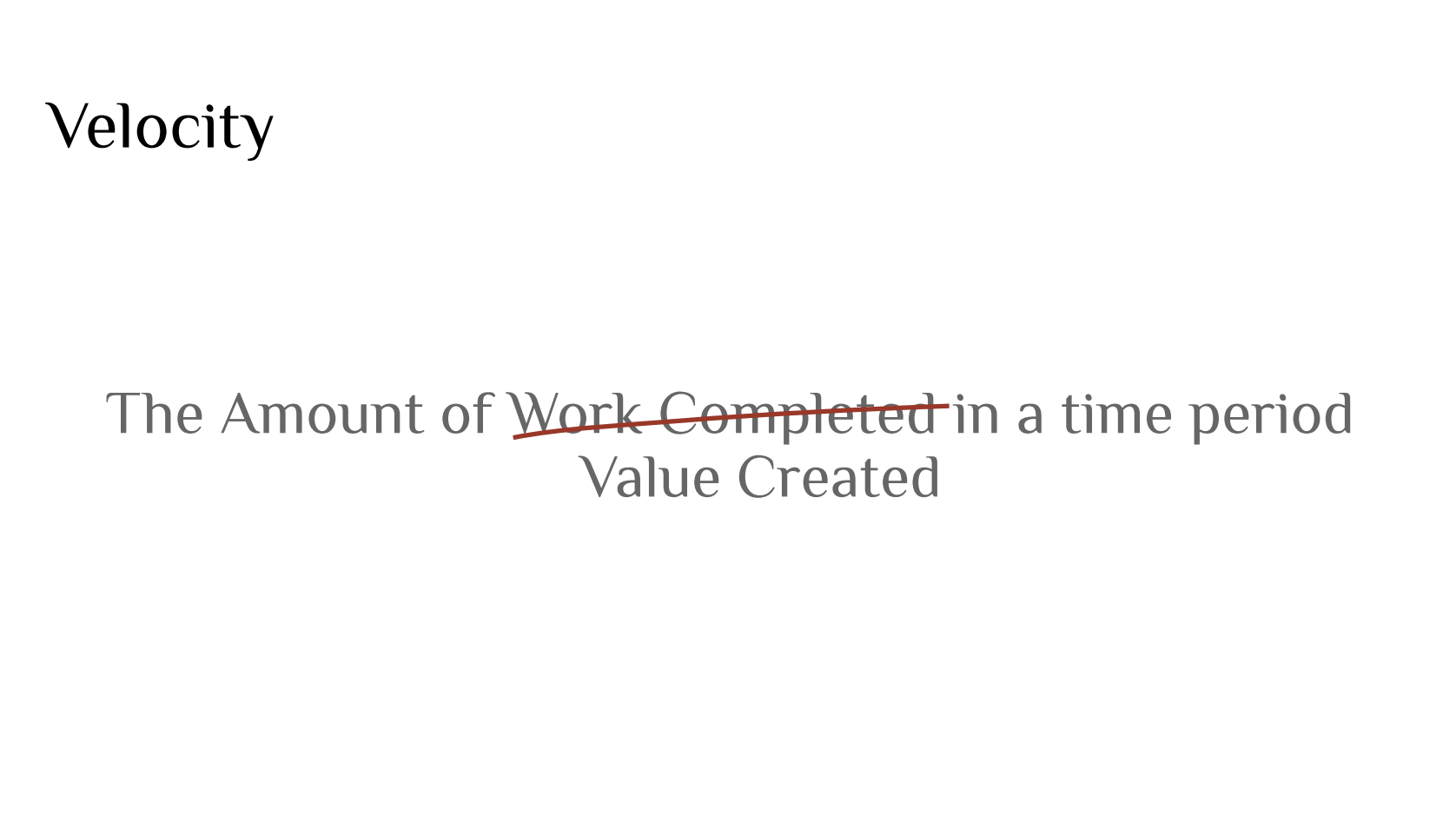
Velocity isn't story points completed. Velocity is the amount of business value you create in a given time period. That's it.
Sometimes creating that value means taking shortcuts that would make your engineer brain cringe. Sometimes it means building something quick and dirty that you know you'll have to rewrite in six months. And sometimes, often, that's exactly the right choice, because the simple brutal fact is that if you don't then in six months you might not have a company to rewrite code for.
The Real Job of a Startup CTO
A startup CTO isn't the same job as an enterprise technology leader. I've worn many hats, and at WWD, my job was to maintain and improve a proven system. At a startup, you're much more like the CFO of technology risk.
Every technical decision is a financial decision. When you choose to refactor that messy module instead of shipping the feature your sales team desperately needs to close their next deal, you're making a bet with company money. You're betting that the long-term benefits of clean code outweigh the short-term cost of potentially losing that customer.
At WWD, that bet made sense; we had very stable revenue, we had time, we had users who would stick around. At a startup? Often it doesn't.
The Three Questions Every Startup CTO Must Answer
When I work with startup CTOs, I teach them a simple framework. Before any technical debt discussion, you need to answer three questions:
1. What stage are we actually at?
- MVP stage: Maximum debt is not just acceptable, it's required. Speed to market trumps everything else.
- Product-market fit: Pay down only the debt that's actively blocking further velocity. Everything else can wait.
- Growth stage: Now you focus on stability debt that could cost you revenue or uptime.
2. What's our actual risk tolerance? A seed-stage startup burning through their last $200K has a very different risk profile than a Series B company with $50M in the bank and paying customers. Your technical debt strategy should reflect that reality, not some abstract engineering ideal.
3. What's the real cost here? Not the theoretical cost of "bad code" that makes engineers uncomfortable, but the measurable business impact. Is this debt actually slowing us down right now, or does it just offend our sense of what good code should look like?
The Contract Mindset
This is the fundamental shift every startup CTO needs to make: stop thinking only as an engineer and start using engineering and technical debt as financial instruments. Technical debt isn't a mess to clean up, it's a growth lever to manage.
Simple example: When you take out a mortgage to buy a house, you don't throw every spare dollar at paying it off immediately. You make strategic payments while using your remaining capital for investments that might have higher returns. Maybe you invest in the stock market, maybe you start a business, maybe you just keep cash on hand for emergencies.
Technical debt works exactly the same way. Sometimes the highest-return investment isn't paying down that debt. It's shipping the feature that unlocks your next funding round, or building the integration that lands your biggest customer yet.

What Every Startup CTO Needs to Know
When I teach at Wharton's CTO program or work with early-stage technology leaders, these are the core principles I emphasize:
Your engineers will default to perfectionism. This is a good thing, and whenever I post about this topic on LinkedIn I invariably get flamed in the comments by engineers. Most engineers have been trained at companies where clean code is always better. But in a startup, clean code that ships too late might just be worthless code. Or it may get thrown away a week later. You have to actively manage this instinct for perfectionism.
Measure what actually moves the needle. Stop tracking code coverage and start tracking time-to-market. Stop measuring technical debt and start measuring business velocity. The metrics that mattered at scale don't matter when you're burning cash and racing to product-market fit and barely trying to stay in business.
Embrace strategic messiness. The goal isn't to build software that will last forever, it's to build software that will get you to the next milestone alive. You can always refactor later if you're successful enough to have a "later."
The Real Cost of Zero Debt
I've seen this pattern repeat: startups die because they prioritize architectural purity over market reality. They have beautiful, clean codebases that nobody uses because they shipped six months after their competitor captured the market.
The pursuit of zero technical debt isn't just inefficient in a startup context, it's often actively dangerous. It's a luxury that early-stage companies literally can't afford, like spending your last $50K on a Herman Miller chair instead of paying your developers.
The startup CTO's job isn't to build perfect systems. It's to build systems that are just good enough to get you to the next stage, where you'll have more resources, more time, and more certainty about what you're actually building. At that point you'll have learned so much more about your business that you'll invariably want to rewrite big swaths of code anyway, so start with this in mind.
The Paradox of Perfect Code
Here's the fundamental paradox every startup CTO must understand: the pursuit of perfect code can create imperfect businesses.
In enterprise environments, technical debt is indeed dangerous because the system is the business. But in startups, the business is still becoming the system. Technical debt isn't a sign of failure; it's evidence of learning.
The most successful startups I've worked with treat their early codebase like a prototype, not a monument. They understand that premature optimization isn't just inefficient, it's a form of procrastination. You're testing constantly so optimizing for a future you can't predict is often less important than solving for the present you can measure and impact now.
The real insight isn't that technical debt is good or bad. It's that context determines everything. The same engineering principles that keep century-old media empires running will kill month-old startups. The same shortcuts that would be reckless at enterprise scale become essential survival tools at startup scale.
Your job as a startup CTO isn't to eliminate technical debt. It's to be strategic about when you accumulate it, when you pay it down, and when you let it compound. Master that timing, and you'll build systems that don't just work, they'll be wildly successful.