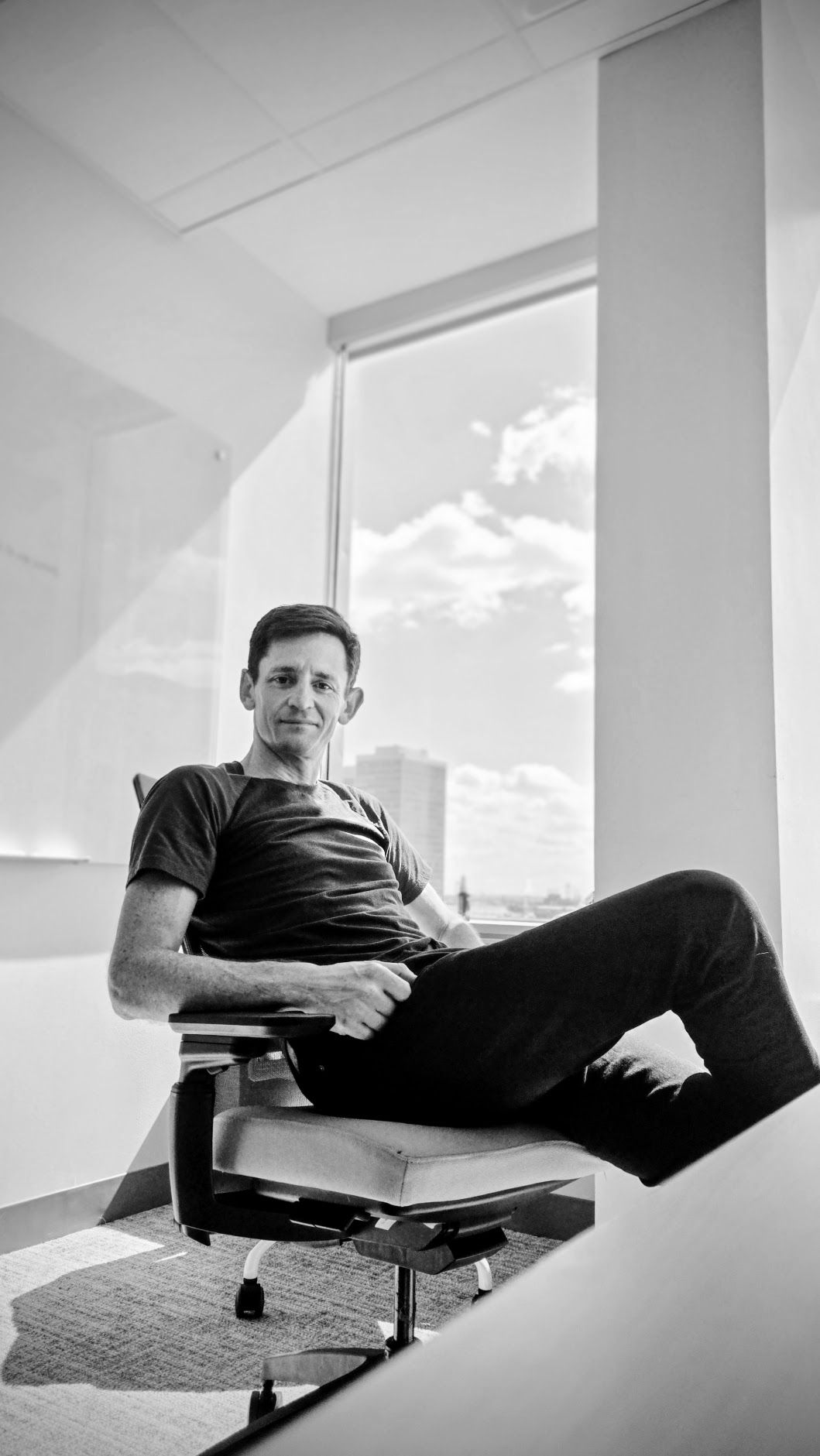
Systems, software, and visual design. I find the principles that create clarity, then build on them.
Core Principles
The Why
Technology Should Put People First.
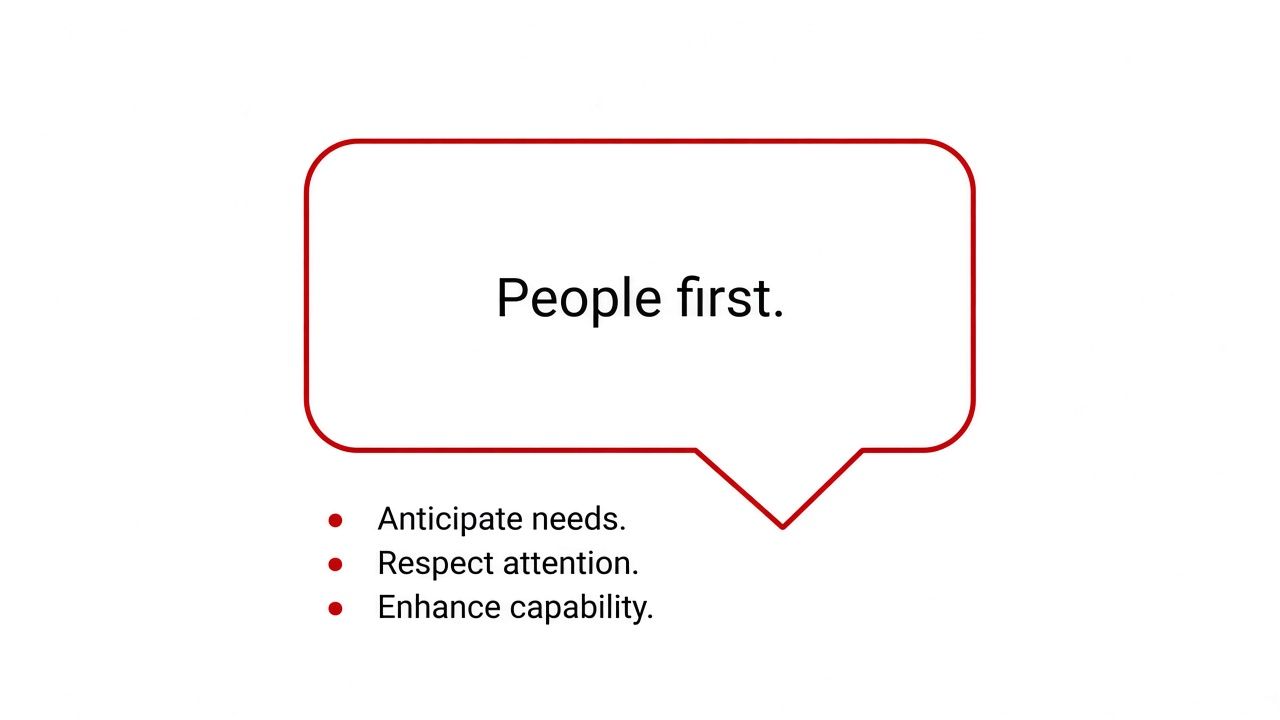
Software should be an empathetic power-up for humans: anticipate needs, respect attention, enhance capability. If it does not make someone's life better, it is not worth building.
The How
Build Small Things.
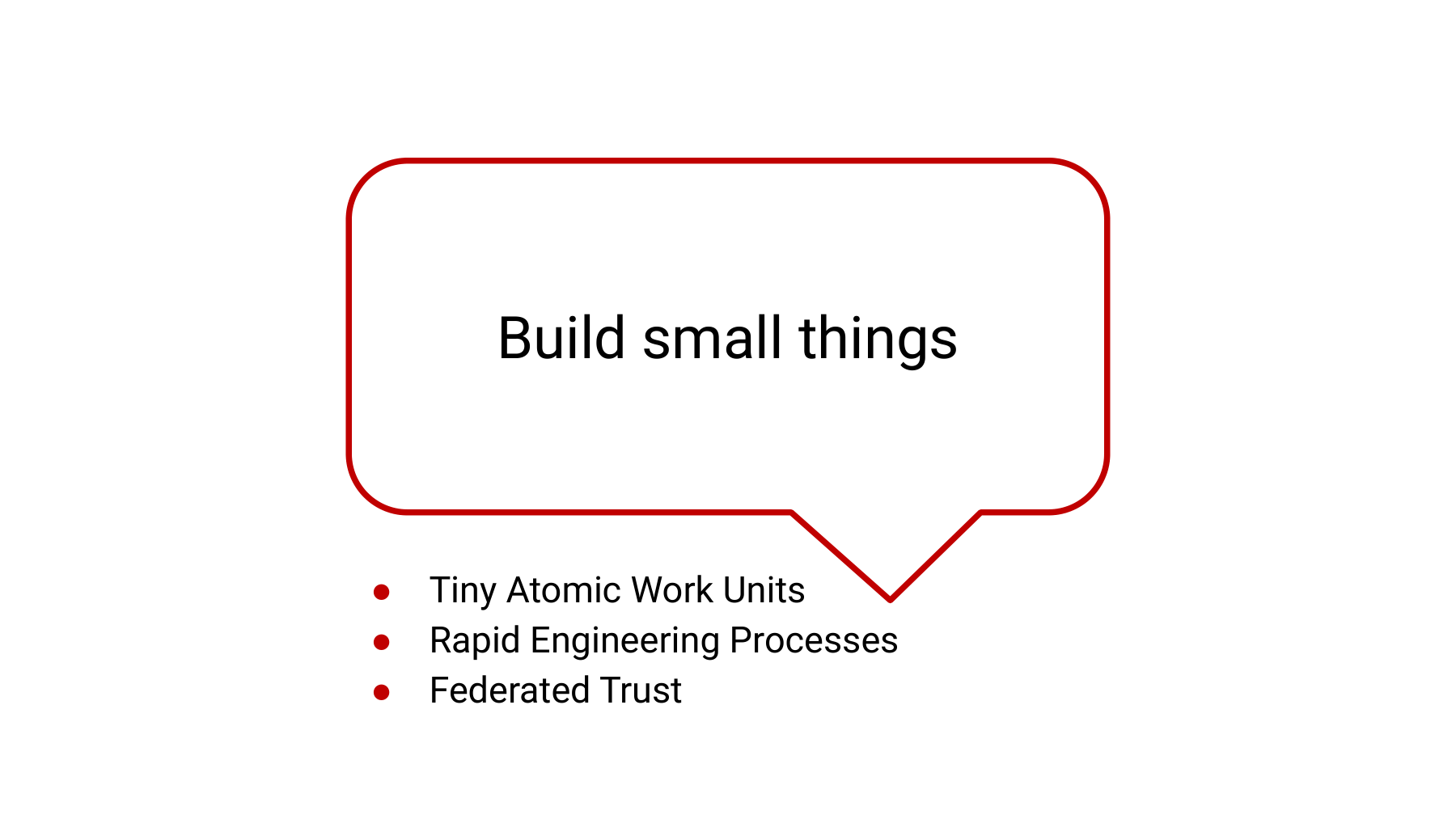
Complexity fails. Simplicity wins. Break work into atomic units, ship constantly, and escape the doom spiral of process that pretends to be progress.
Professional Work: Case Studies
Chief Technology Officer
IndeVets (PE-Backed HealthTech)
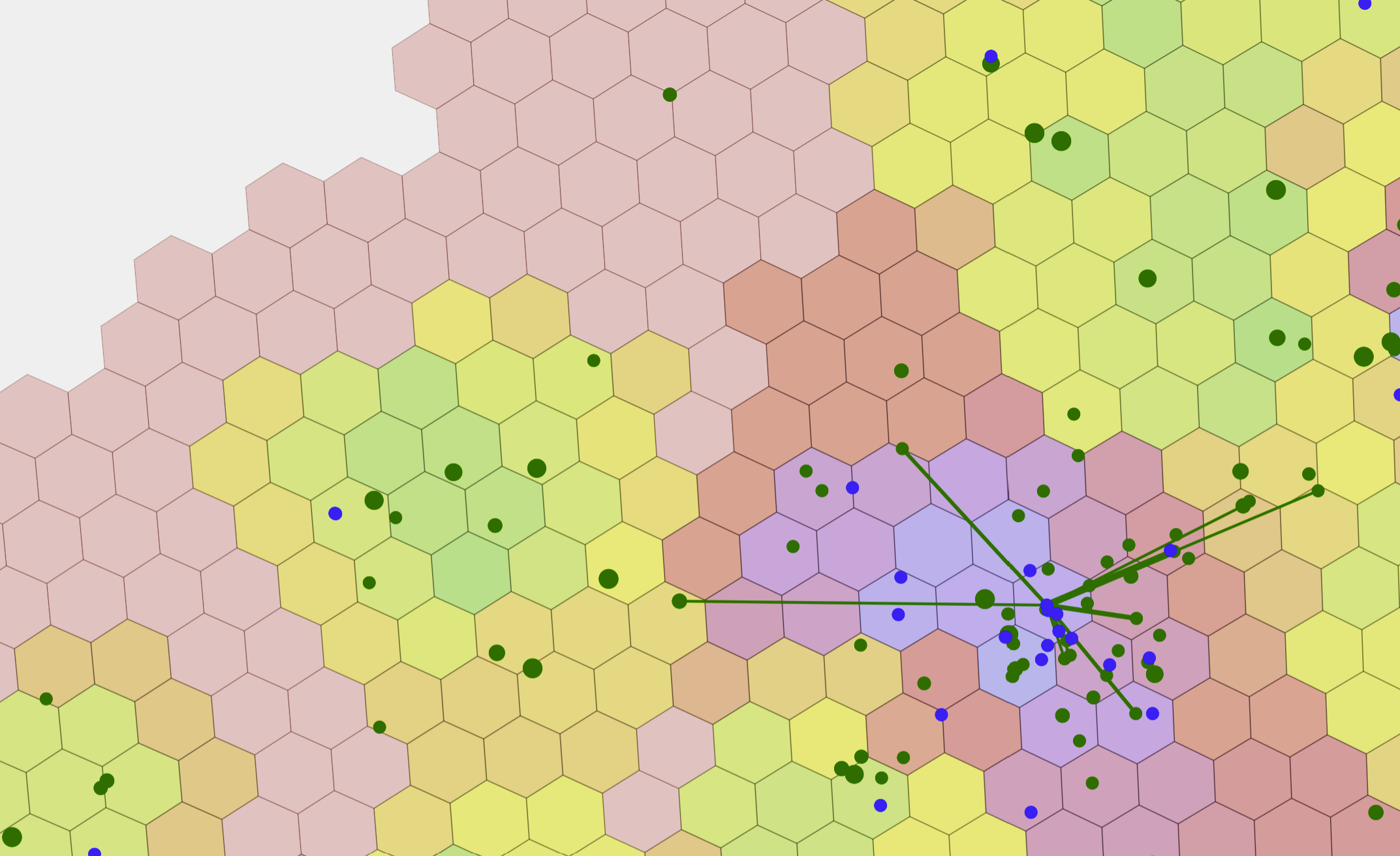
Challenge: Build a proprietary technology platform to enable rapid, de-risked market expansion.
Core Achievement
- Architected a proprietary, ML-backed Algorithmic Optimization Engine.
- Drove substantial SG&A reduction by precisely modeling supply/demand.
- Built the in-house product & technology organization, replacing external agencies.
Director of Engineering
goPuff ($9B+ Hypergrowth)
Challenge: Scale the consumer platform and engineering organization to meet explosive global demand.
Core Achievement
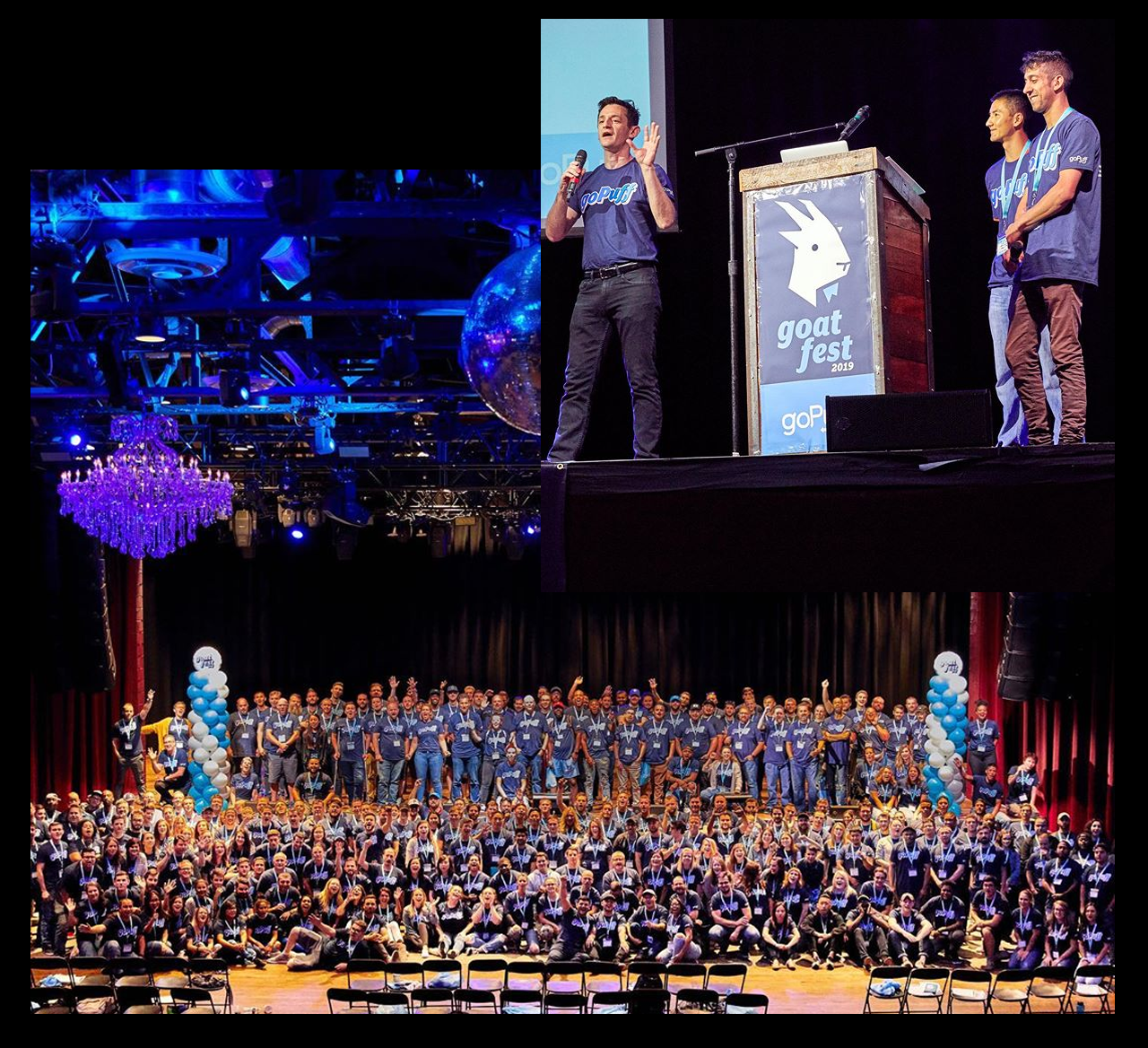
- Scaled the engineering organization from 7 to over 200 engineers.
- Championed and built the company’s first Product Experimentation Platform.
- Delivered multi-point lift in Average Order Value (AOV).
Chief Technology Officer
IncentFit (Corporate Wellness)
Challenge: Engineer a reliable, secure financial platform to handle high-volume transactions and complex data integrations.
Core Achievement
- Architected the core financial engine, processing over $500M in funds annually.
- Built a robust data ingestion platform (Fitbit, Apple Health, Google Fit).
- Led the platform from MVP into a solution serving over 200 clients.

Have a question about this?
I've used Vertex AI to build a knowledge index of this site. Ask my LLM about the work, the writing, or how something was built.
The Lab
Ask Nico
RAG-Powered LLM Chat
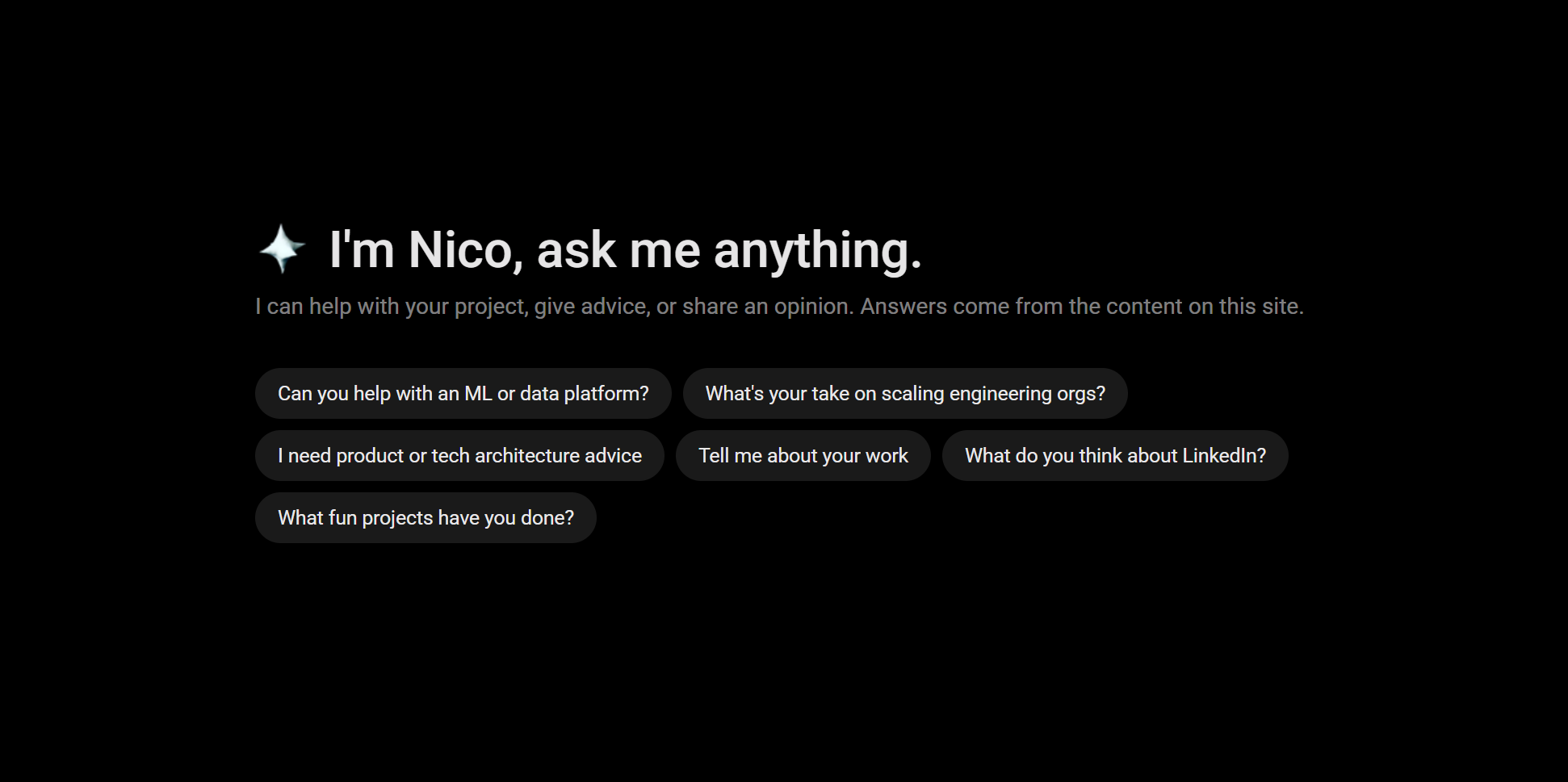
Chat with my blog. Ask questions about my posts, my technical choices, or anything I have written. Answers are grounded in my resume, case studies, blog posts, and site content.

Hyperlight Protocol
Single Bit Communication
An experiment in using a simple lightbulb for high-speed, low-latency communication. Exploring how the most basic binary state can create meaningful interaction across physical and digital spaces.
QWERTY Keyboard Installation
Human-Computer Interaction & Ergonomics
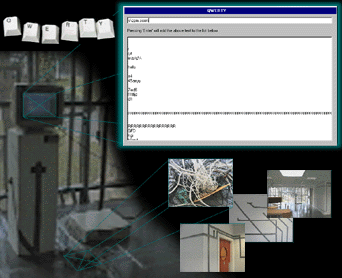
A physical installation exploring communication constraints by distributing 101 keyboard keys throughout a building via 700 meters of wire. An investigation into the impracticalities of digital interaction.
Latest Articles
Build Small Things: A Manifesto for Successful Software Development
Whether in project planning, process design, or individual work patterns, complexity creates project failure. This manifesto showcases pragmatic steps to create impactful software and a highly engaged organization capable of meaningful change.
Building a LinkedIn ML Persona: Part 2 - Infrastructure
I had the data to clone my persona, now I needed to serve it for pennies. This is a story of cloud architecture trade-offs, GPU pain, and a hack that makes Cloud Run work for ML.
Ask Nico: Turning My Static Blog into a RAG-Powered LLM Chat
Here is how I used Nuxt, Markdown, and Vertex AI Search to turn my blog into a queryable LLM knowledge base that actually knows what I wrote.
Thought Leadership & Mentorship
"My goal is to mentor founders and technical leaders to build self-sustaining organizations, de-risking the path to scale."
- Guest Lecturer, Emeritus CTO Program at Wharton Executive Education & Cambridge Judge Business School.